Can Wisdom Teeth Cause Ear Pain?
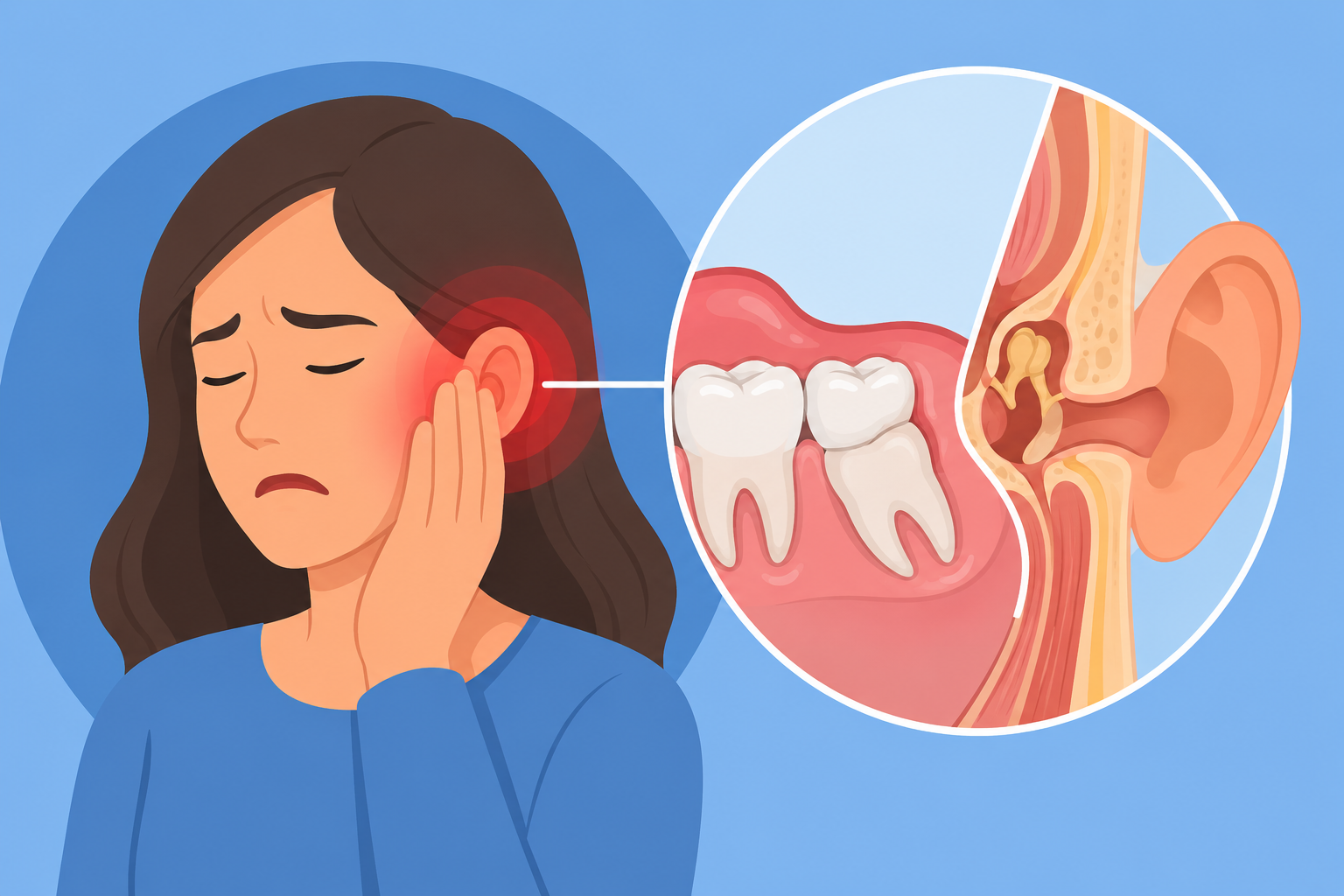
Experiencing ear pain without an obvious ear problem can be confusing. Surprisingly, wisdom teeth are often a hidden culprit. The back molars sit close to the jaw nerves, and pressure or infection in this area can radiate toward the ears. Understanding this connection is essential for effective relief.
If you’ve noticed aching, throbbing, or pressure near your ear along with jaw discomfort, it could be related to your wisdom teeth. This article explores why wisdom teeth cause ear pain, the symptoms to watch for, and the relief strategies available.
Wisdom teeth, or third molars, usually appear between ages 17 and 25. Even before they fully erupt, they can create tension in the jaw that radiates to the ears.
The jaw and ear share several major nerves. The and transmit sensations from the teeth and jaw to areas near the ear. When a wisdom tooth presses on surrounding tissues, these nerves can send signals that feel like ear pain, even though the ear itself is healthy.
A tooth that is blocked under the gums or bone is considered . Impacted teeth increase pressure in the jaw, which can extend toward the ear and jaw joint. Persistent pressure may intensify during chewing or when the jaw muscles tighten.
Impacted wisdom teeth are a common cause of ear-related discomfort, and early recognition can prevent more severe complications.
Sometimes, wisdom teeth grow at odd angles. When a tooth pushes sideways against the jaw or neighboring teeth, it can create persistent pain that spreads to the ear. If you notice tenderness or discomfort in the back of your jaw, reviewing signs can clarify whether the tooth’s direction is causing the problem.
Wrong growth often leads to pressure buildup, which may not only affect the jaw but also radiate to the ears and surrounding muscles.
Ear pain caused by wisdom teeth usually comes with additional dental or jaw symptoms. Recognizing these patterns helps distinguish ear-related dental issues from other causes.
Inflammation around the wisdom teeth can make the jaw muscles tight, resulting in difficulty opening your mouth or yawning. This stiffness often magnifies referred ear pain.
Swelling behind the last molars can signal irritation or infection. Pain may worsen when brushing, chewing, or even swallowing.
A deep, persistent ache originating from the jaw often radiates to the ear. This is a classic sign of nerve irritation caused by wisdom teeth pressure.
Because the trigeminal nerve spans the face, pain from wisdom teeth can extend to the cheeks, temples, or even trigger headaches.
Favoring one side of the mouth can result from discomfort around a wisdom tooth. This can lead to uneven pressure on the jaw, further aggravating ear pain.
When a wisdom tooth partially erupts, bacteria may collect under the gum flap, causing mild infection. This infection may amplify ear discomfort and jaw soreness.
Understanding the root cause is essential to proper treatment. Ear pain may arise due to several common factors:
Impacted teeth are trapped under the gums or bone, often pressing against other teeth or jaw structures. This pressure irritates nerves that extend toward the ear.
Partial eruption can lead to bacterial accumulation, resulting in pericoronitis—a gum infection that causes swelling, throbbing, and radiating pain toward the ear.
Even fully erupted wisdom teeth can push against adjacent teeth, causing misalignment. Jaw strain from this pressure may lead to tension that radiates to the ear.
In rare cases, cysts form around developing wisdom teeth, creating pressure in the jaw. Similarly, decay or gum disease can irritate nerves, leading to ear discomfort.
Not all wisdom teeth require extraction. However, consistent ear pain often signals that intervention may be necessary. Signs include:
- Persistent jaw or ear pressure
- Recurrent infection or gum inflammation
- Difficulty chewing or opening the mouth
- Damage to adjacent teeth or formation of cysts
Before making decisions, it can be helpful to compare procedures with more complex surgical options. This knowledge helps patients set realistic expectations and prepare for the recovery process.
Simple extraction is often suitable for teeth that have fully erupted, while impacted or misaligned teeth may require surgical removal.
Even before extraction, there are ways to alleviate discomfort from wisdom teeth.
Applying heat relaxes tight jaw muscles and reduces nerve irritation, which often eases ear pain.
Cold packs help decrease inflammation and numb the affected area, providing temporary relief.
Rinsing with warm salt water reduces bacterial buildup and soothes inflamed gums around partially erupted teeth.
Ibuprofen or acetaminophen can manage both ear and jaw pain, especially when combined with home care techniques.
Persistent ear pain warrants a dental exam. Recognizing early signs can prevent complications. Sometimes discomfort appears before the tooth fully erupts, so timely assessment is critical.
If extraction is needed, proper aftercare ensures healing and minimizes complications. Following after removal reduces the risk of infection and supports jaw comfort.
Recovery tips include:
- Eating soft foods
- Avoiding smoking or alcohol
- Gently rinsing with warm salt water
- Following prescribed medications
A potential complication of extraction is , which occurs when the blood clot is dislodged. It can cause severe pain radiating to the ear and jaw.
Dry socket management involves prompt dental care and proper wound care.
Seek immediate attention if you notice:
- Rapid swelling or fever
- Severe, radiating jaw pain
- Difficulty swallowing
- Persistent bleeding or numbness
Early evaluation prevents serious complications and ensures ear pain linked to wisdom teeth is resolved efficiently.
Ear pain from wisdom teeth is common but often overlooked. Because the jaw and ears share nerves, pressure, infection, or misalignment can cause referred pain. Recognizing the symptoms early, understanding the causes, and considering appropriate relief or extraction can prevent prolonged discomfort.
By paying attention to , , and proper post-extraction care, you can manage pain effectively and maintain oral health.

Can You Go to Work or School After Wisdom Tooth Removal?
June 9, 2026

Natural Ways to Improve Oral Health and Your Smile
April 27, 2026
Are Wisdom Teeth Useful or Evolutionary Leftovers?
March 10, 2026
Is Jaw Surgery Covered by Insurance?
January 5, 2026
Zygomatic Implants: Your Guide to a Stronger Implant Solution
November 26, 2025